Helping actors act with clarity,
care and connection.
Navigating Today’s Challenges
A sector in transition and space for new ways of supporting
The aid and humanitarian sectors are undergoing a deep shift. Financial constraints, reduced state funding, and institutional fatigue are reshaping how support systems operate. At the same time, many traditional “big players” are facing limits in reach, relevance, and agility.
Yet the demand for support remains high, not only in crisis contexts, but in response to current violence, inequality, and exclusion. Since the 2016 World Humanitarian Summit, the call for support that is more local, ethical, and people-centered has only grown louder, both from within the sector and from the public, eager to contribute beyond traditional channels.
This evolving landscape is opening space for new forms of action: smaller initiatives, community-led mechanisms, and more direct, trust-based partnerships. People Centered Support is well placed to shape that shift not by replacing existing systems, but by helping them evolve.
It supports actors in clarifying their roles, strengthening their contributions, and building more intentional, values-aligned partnerships. This includes enabling larger organizations to shift from direct implementation to becoming strategic enablers, supporting local leadership, co-creating solutions, and investing in long-term, trust-based collaboration.
This work complements, not competes with, other efforts. Many individuals and organizations are already moving toward more inclusive and people-led models and that diversity is a strength. There is real need, multiple causes, and ample space for a wide range of contributions.
Support has been provided across a range of domains:
Community-based organizations on the front lines of crisis, looking to strengthen voice and agency.
Local and national organizations adapting programs to be more inclusive, participatory and protection-focused.
International agencies and INGOs working to embed people-centered practices into their strategy, partnerships and operational models.
Universities integrating people-centered thinking into curriculum and training future practitioners.
Beyond the traditional aid system, People Centered Support is increasingly relevant to other sectors:
Public institutions, designing more responsive and participatory services — such as patient-centered healthcare models or inclusive social policies.
Private sector actors, seeking to build impactful, values-driven initiatives that align with sustainability goals and strengthen social engagement.
Philanthropic foundations, aiming to foster closer, more accountable partnerships with local actors, bridging the gap between funders and the realities of the communities they support.
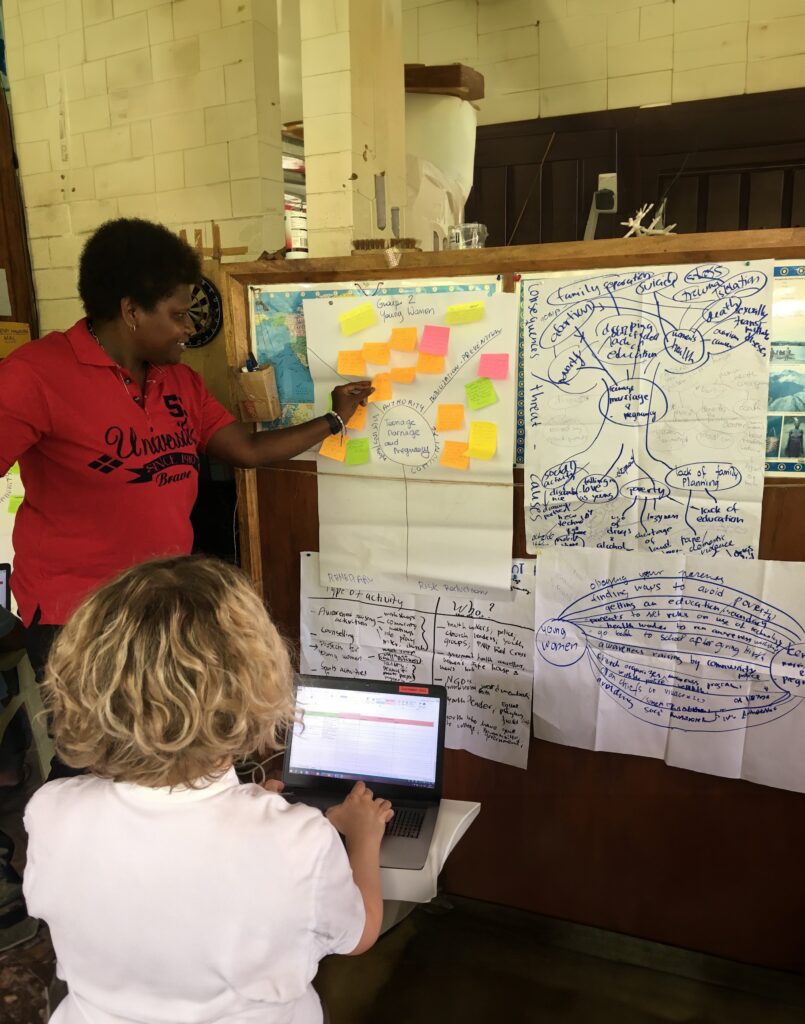
Across all of these settings, the goal is the same: to enable support that is grounded, strategic and respectful of people’s agency. It’s not one-size-fits-all, it’s thoughtful, adaptive collaboration that aligns each actor’s comparative advantage with the needs and strengths of those closest to the issue.
What’s Offered
Services adapted to purpose, scale and context
Support has been provided across a range of domains:
Strategic Design Support
Guidance for new or ongoing initiatives to ensure people are not only consulted, but meaningfully engaged — from defining priorities to shaping what success looks like.
This includes direct accompaniment to apply the People Centered Approach in real time. This learning-by-doing model builds confidence and capacity to replicate the approach independently. Inclusive facilitation and co-creation are embedded in this process.
Training and Workshops
Interactive sessions tailored to teams or institutions, introducing the principles, roadmap and matrix of the People Centered Approach, with real-world application.
Review and Advisory Services
Strategic input on proposals, programs, or internal processes to ensure alignment with inclusion, protection, participation and accountability.
Tools and Methods
A range of adaptable, user-friendly tools to embed people-centered thinking across programs and systems, from fieldwork to organizational change.
For Humanitarian Contexts
Grounding response in protection, dignity and agency
In humanitarian settings, the People Centered Approach is anchored in the centrality of protection. It begins not only with identifying needs, but with understanding the threats people face, including violence, exclusion and systemic injustice.
Support is designed not just to deliver aid, but to reduce harm, strengthen safety and reinforce people’s ability to lead their own recovery. This approach links basic services and protection strategies, helping actors respond in ways that are accountable, inclusive and grounded in people’s lived experiences.
Even in high-pressure environments, it creates space for more trusted, relevant and sustainable responses led with and by affected communities.